
With markets getting back their mojo after four months, small- and mid-cap shares raced ahead of large caps in April. The Nifty Smallcap 100 index surged 7.5 per cent - its biggest monthly advance in 10 months - and outperformed the benchmark Nifty 50 index by 350 basis points. The Nifty Midcap 100 index soared 5.9 per cent, most since August.

The automobile sector has started seeing volume growth, the crucial economy segment included. Maruti Suzuki India (MSIL) could be a big beneficiary as the country's largest passenger vehicle (PV) maker has seen several favourable developments including volume recovery. Demand for its new sports utility vehicles (SUVs) appears to be good, and the company has 4 lakh outstanding orders by April 2023, (up from 3.6 lakhs in January 2023). Siam (Society of Indian Automobile Manufacturers) estimates that passenger vehicle demand would grow by 5-7 per cent in the 2023-24 financial year (FY24) and MSIL is likely to beat the market growth.

Equity benchmark BSE Sensex tumbled nearly 700 points to sink below the 79,000 level on Tuesday, extending its losses for the second straight day due to selling pressure in HDFC Bank, SBI and ITC amid fresh foreign capital outflows. The 30-share BSE Sensex tumbled 692.89 points or 0.87 per cent to settle at 78,956.03. During the day, it tanked 759.54 points or 0.95 per cent to 78,889.38.

India Inc continued to grapple with muted revenue growth in the September 2024 quarter (Q2FY25) and witnessed a decline in margins and profits. The headwinds were especially severe for non-financial companies, while banking, financial services, and insurance (BFSI) firms significantly outpaced the rest of the corporate sector. The total profit of 1,353 listed companies that have released their Q2FY25 results thus far dropped by 0.6 per cent year-on-year (Y-o-Y) - the first cumulative earnings decline in eight quarters.

Tata Consultancy Services' (TCS') contribution to the overall market capitalisation (mcap) of listed Tata group companies has slipped below 50 per cent for the first time in over a decade. This has happened amid a rally in other Tata stocks, led by smaller companies, even as TCS, the group's largest company by mcap, has lagged. In recent quarters, Tata's listed firms have emerged as leading performers on the bourses, with the group's combined mcap crossing Rs 30 trillion early last week - a first for a private sector conglomerate.

'It is critical that the Covid curve does not have a fat tail and the chain is broken quickly.'

Shares of auto component major, Samvardhana Motherson International, has gained 11.5 per cent on the bourses after the company approved the qualified institutions placement (QIP) issue and announced the calculation methodology for its compulsorily convertible debentures, or CCDs, into equity shares. Analysts cite strong investor response to the issue that has kept the sentiment positive for the stock. Brokerages, however, have a mixed view on the outlook for the auto parts supplier.

Cholamandalam Investment and Finance's (Chola) share has yielded one of the best returns in the last month. The company has sustained assets under management (AUM) growth at 7 per cent quarter-on-quarter (Q-o-Q), and 35 per cent year-on-year (Y-o-Y) in Q1FY25. Scaling up of new businesses now contributes to 13 per cent of loans (vs 10 per cent in Q1FY24).

The stock of footwear major Bata India has been the highest gainer among larger listed footwear companies since the start of the month on expectations of a recovery in the value segment, new launches and measures by the new government to boost consumption. The third largest footwear maker by market capitalisation has been trailing its peers over the past few quarters due to the slowdown in the mass segment market which accounts for a significant chunk of its revenues.

Benchmark BSE Sensex rebounded sharply by 941 points while NSE Nifty closed above the 22,600 level on Monday on the back of buying in banking and infra shares and a global stocks rally. The 30-share BSE Sensex jumped 941.12 points or 1.28 per cent to settle at 74,671.28. During the day, it zoomed 990.99 points or 1.34 per cent to 74,721.15.

Eighty per cent, or 60 of the 75 companies that made their debut on the mainboard this financial year, ended their listing day with gains.

M&M was the biggest gainer on the Sensex chart, rising 5.97 per cent, followed by JSW Steel, Ultra Cement, Kotak Bank, ITC and NTPC. Reliance Industries gained 0.73 per cent to close at Rs 2,871 apiece. In contrast, TCS, HCL Tech, HUL, Nestle Industries, Bajaj Finserv, Wipro and Infosys were among the losers.

The outflows could be a result of a mix of factors led by the underperformance of some of the larger funds amid elevated return expectations.

Given gains in equity prices, it is not surprising that the earnings of asset management companies (AMCs) are growing quicker. The earnings momentum looks set to continue. Good fund performances have thus led to AMC earnings upgrades although valuations are high. Recent market performance and net flow trends have led to earnings upgrades by between 3-8 per cent for FY25-27.

The BSE mid-cap and small-cap stocks have outperformed the benchmark Sensex in 2023-24 with about 62 per cent returns, reflecting buoyant investors' sentiment amid robust macroeconomic conditions in the country and impressive quarterly earnings reported by various firms. As per an analysis, the BSE mid-cap gauge jumped 15,013.95 points or 62.38 per cent in the 2023-24 fiscal, while the small-cap index climbed 16,068.99 points or 59.60 per cent. In comparison, the 30-share BSE Sensex raked in a gain of 14,659.83 points or 24.85 per cent during the fiscal under review.

Long-term macro trends indicate growth in demand for air travel. Trends from the ticketing website MakeMyTrip indicate a likely annual growth of between 11-17 per cent in Indian air travel demand over FY24-30. Through that period, InterGlobe Aviation or IndiGo may continue to make gains in market share in both domestic and international travel, aided by large fleet additions. IndiGo is the largest global customer of Airbus by far with 950 aircraft orders outstanding.

'These are capex and infrastructure-linked sectors, PSUs or stocks of some corporate houses.'

Market players attribute the rally in small and midcaps to flows from retail investors and domestic institutions.

Public-sector enterprise stocks have seen a good run thus far in 2023-24 (FY24), with the S&P BSE PSU Index surging by over 26 per cent during the period, compared to an 11 per cent increase in the benchmark S&P BSE Sensex.
The stock of the country's largest passenger vehicle maker, Maruti Suzuki India (MSIL), has been hitting successive all-time highs over the past three trading sessions. The rally in the scrip has helped it notch over a 21 per cent gain since the start of February, outperforming the National Stock Exchange Nifty Auto Index. The gains for the leader of small passenger cars have been more recent, as the company still trails the Nifty Auto over one- and two-year periods.

After some enforced slowdown in offtake during April-May 2024 due to elections, the cement sector is looking at a possible demand rebound which may help it to push up prices. The April'24 offtake was muted while May'24 saw some improvement with a likely 5-6 per cent rise in demand month-on-month (MoM). In June, some price hikes seem to have been taken, which suggests more sustained improvement in demand.

From the Sensex pack, HCL Technologies, Infosys, Wipro, Bharti Airtel, Larsen & Toubro, Mahindra & Mahindra, Tata Consultancy Services and Asian Paints were the major gainers. Axis Bank, IndusInd Bank, Bajaj Finance, JSW Steel, State Bank of India and Tata Steel were among the major laggards.

Mumbai-based developers Macrotech Developers (Lodha) and Oberoi Realty have emerged as top gainers among largecap realty stocks over the past month, with gains ranging from 29 per cent to 33 per cent. Strong ongoing sales trends in Mumbai's core market, record bookings in the January-March quarter, and healthy guidance for 2024-25 (FY25) have propelled these companies, which derive the majority of their revenues from India's financial capital.

Britannia Industries reported revenue growth of 4 per cent year-on-year (Y-o-Y) in Q1FY25 and volume growth of 8 per cent implying price trends were adverse. Other operating income jumped 195 per cent, due to the incentive received for the Ranjangaon plant. The non-biscuit portfolio (rusk, cake, bread) remained key to growth and contributed 25 per cent of the total revenue.

There could be near-term margin pressures for lifestyle accessories major Titan Company. Even as the company maintains its growth outlook over the medium term, it has revised its margin guidance for the jewellery segment downwards. The company has adjusted its medium-term margin guidance to 12 per cent from the previous range of 12-13 per cent.

Bharat Electronics (BEL) reported excellent results for the January-March quarter (Q4) of FY24, which were driven by decent EBITDA margins and higher PAT as well as good revenue growth. Order inflows were also good. BEL is a major beneficiary of the policy of defence indigenisation.
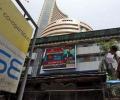
Shares of Avenue Supermarts (DMart) have rallied 15 per cent in the past month, even as the benchmark National Stock Exchange Nifty has remained flat. The stock has garnered favourable commentary from both fundamental and technical analysts after three years of poor performance. "DMart has reached its first 52-week high since October 2021, taking off from solid base formations.

Riding on a strong market sentiment, these stocks have outperformed the bellwether. The flip side is, they can fall faster when the tide turns.

Ultra-long term equity investments have been a lot more rewarding than debt, a study published by Credit Suisse Research Institute in collaboration with London Business School shows. "Over the last 121 years, global equities have provided an annualised real return (in dollar terms) of 5.3 per cent versus 2.1 per cent for bonds," shows the study, which has looked at returns for 23 countries since 1900. In the Indian context, equity returns are even more favourable. Since 1953, equities have generated annualised returns of 6.5 per cent and government bonds only 0.4 per cent.

Fast-moving consumer goods (FMCG) companies anticipate sustained volume pressures in the January-March quarter (Q4) coupled with sluggish rural growth during the period. Brokerages estimate top-line growth to be in low single digits in the quarter. Also, the late onset of winter had an impact on demand for winter products which range from moisturisers to hot beverages.

Although net inflows into equity mutual funds deteriorated month-on-month (M-o-M) in March 2024 to Rs 22,576 crore (excluding Hybrid), down 15 per cent M-o-M (up 12 per cent Y-o-Y), asset management companies (AMCs) had a great year with robust growth in assets under management (AUMs). AMCs are likely to report strong PAT growth (30-40 per cent Y-o-Y) in Q4FY24 on the back of AUM growth. In Q4FY24, domestic mutual fund (MF) industry's quarterly average AUM grew by 34 per cent Y-o-Y and 10 per cent quarter-on-quarter (Q-o-Q) to Rs 54 trillion ($652 billion).

Overall market reaction to the Budget was neutral. Investors absorbed the changes to the tax rates (positive for salaried class) and capital gains taxes (CGTs, negative due to the removal of indexation and increases. Other proposals largely pertain to supporting rural development, buybacks taxed as dividends, Custom duty changes that impact multiple sectors, higher outlays for clean energy, etc. There's some moderation in the growth of capex outlay across defence, fer

ABB India's March quarter results (Q1CY24) were led by strong margin performance. Revenue was, however, largely in line with estimates at Rs 3,080 crore (up 28 per cent Y-o-Y and up 12 per cent Q-o-Q). The growth was across electrification (30 per cent Y-o-Y), process automation (73 per cent Y-o-Y) and robotics & motion (8 per cent Y-o-Y).

Tata Motors is likely to exit the S&P BSE Sensex and the Nifty50 indices once the demerger process of its commercial vehicle (CV) and passenger vehicle (PV) businesses is complete, analysts at Nuvama Institutional Equities said. They have compared the development with Reliance Industries (RIL) and Jio Financial Services, which got listed separately and eventually (in the next few days) got excluded from the domestic indices.

Notwithstanding the recent sharp decline in the stocks of public sector companies, analysts at Jefferies remain bullish on this segment. State Bank of India, Coal India, and NTPC are their top picks in this space, they said in a recent note. The public sector undertaking (PSU) or state-owned enterprise (SOE) index, with a 70-percentage-point outperformance versus the National Stock Exchange Nifty50 over the past 12 months, comes after a decade of underperformance before 2020.

Among Sensex shares, Bajaj Finserve, ICICI Bank, Bharti Airtel, Bajaj Finance, Sun Pharma, Maruti Suzuki, ITC, and Nestle were the lead gainers. On the other hand, L&T Wipro, IndusInd Bank and TCS and Tata Motors were the lead losers.

'Those betting against PSUs will likely be punished in this upswing.'

Pharmaceuticals major Mankind Pharma reported a 21 per cent year-on-year (Y-o-Y) increase in net profit, with revenue rising by 12 per cent Y-o-Y in the second quarter of the financial year 2024 (Q2FY24) in a regulatory filing lrecently.

The market capitalisation of BSE-listed companies soared to an all-time high of Rs 406.52 lakh crore on Monday thanks to a rally in equities where the BSE Sensex climbed over 1 per cent. The 30-share BSE Sensex rallied 941.12 points or 1.28 per cent to finish at 74,671.28. During the day, it zoomed 990.99 points or 1.34 per cent to 74,721.15.
Active largecap funds, which have the toughest job in terms of outperforming the benchmark, did better in 2023 as their bets in the mid and smallcap stocks paid off.
 © 2026 Rediff.com - Investor Information - Advertise with us - Disclaimer - Privacy Policy - Sitemap - Feedback - About us - Terms of use - Grievances